
The Short Answer
A roof can go over an existing Woodstock deck when the footings, posts, and framing can carry the added weight, so every project starts with a structural inspection. Many decks built in the 2000s need larger footings or reinforced posts before a roof goes on. Once the structure checks out, the roof is framed, tied into the home's roofline, and flashed so water sheds away from the wall. The job needs a building permit.
Why the Structure Comes First
The structure comes first because a roof is a permanent load the deck was probably not designed for. A roof adds its own weight plus wind uplift, and that load runs down through the posts to the footings. A deck with shallow or clay-heaved footings cannot safely carry it. The inspection checks the footing depth, the post size, and the framing before any roof design is finalized, and it frequently finds that reinforcement comes first.
How the Project Goes in Woodstock
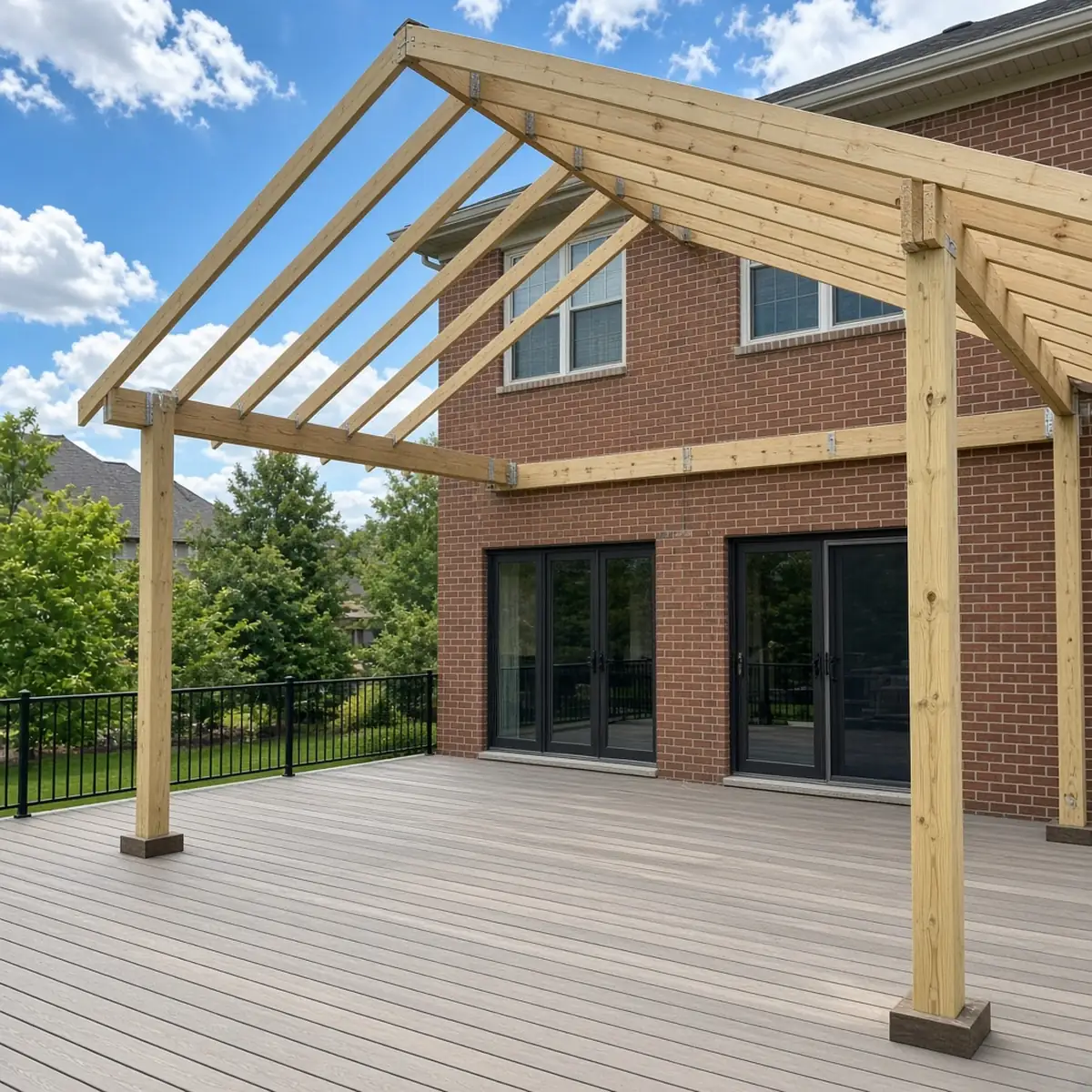
Adding a roof follows a set order once the structure is cleared. First, the deck's footings and framing are inspected and reinforced where they fall short. Second, the posts go up and the roof is framed to match the home's pitch. Third, the roof is covered in shingle or metal and flashed into the house roofline. Finally, the tie-in is checked for leaks and the ceiling is finished before the job is signed off. A permit and inspection apply because the work adds structure.
Shingle vs Metal Roof in Georgia
| Roof type | Fit | Georgia climate notes |
|---|---|---|
| Shingle | Matches most Woodstock homes and existing shingle rooflines | Sheds rain well, blends with the house |
| Metal | Modern look, long life | Sheds heavy rain fast, reflects summer heat |
Both work when flashed and tied in correctly. The choice commonly comes down to matching the house.
What a Roof Over the Deck Changes
A roof over the deck changes how much of the year the space is usable and how the deck ages. It shades the surface from the direct UV that fades and dries boards, keeps furniture and people dry in an afternoon storm, and drops the surface temperature in the summer heat. The trade is some loss of light into the rooms behind it, which the roof pitch and post placement are designed to limit. For many Woodstock homes, the added use outweighs the lost light.