
The Short Answer
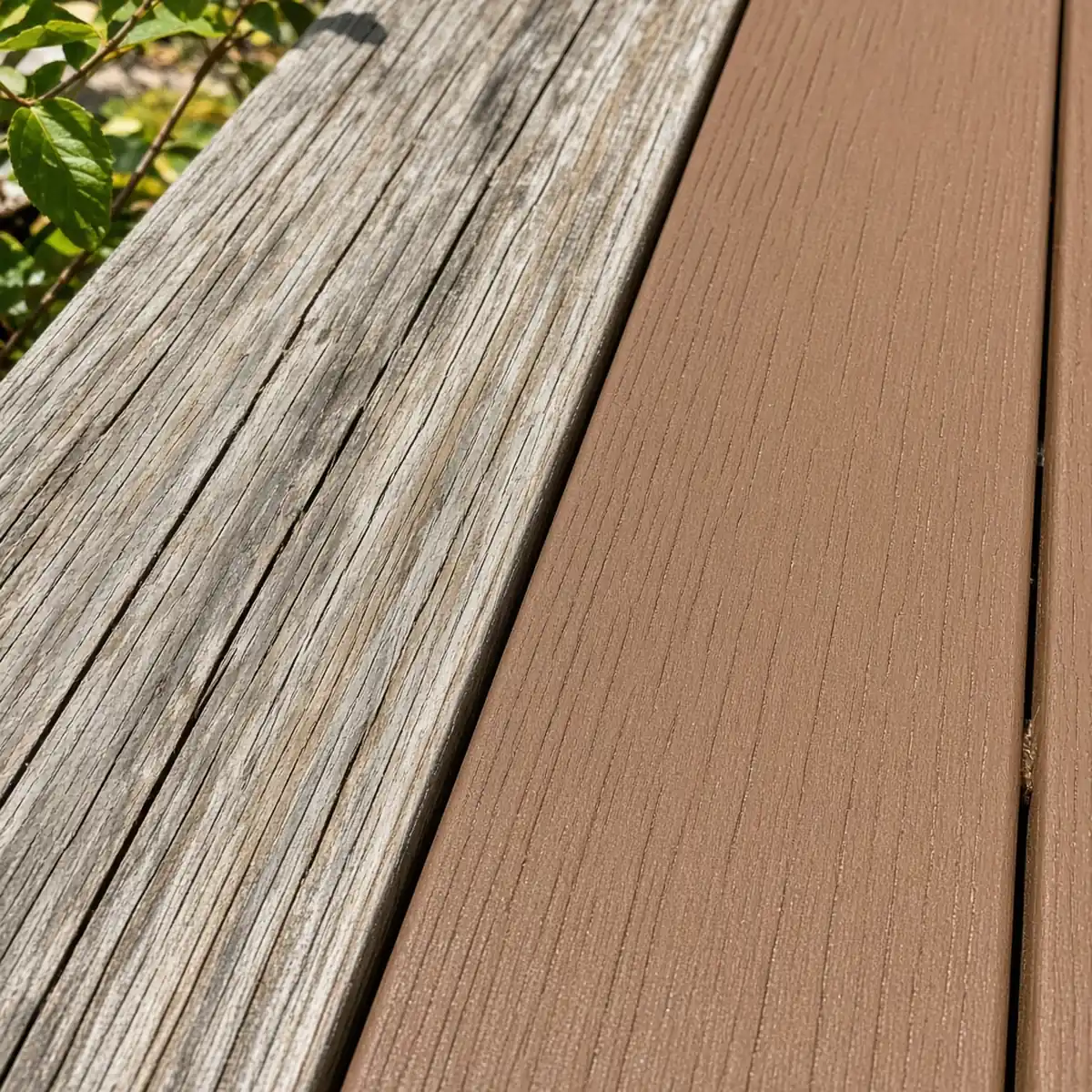
Capped composite decking holds 25 to 30 years in Woodstock, and many manufacturers back the boards with limited warranties of 25 years or more. Wood, by contrast, needs major work at 10 to 15 years here because the moisture rots it from the surface down. The frame under either surface has its own lifespan, and a failed ledger ends a composite deck early no matter how good the boards are.
What Wears Composite Decking Down in Georgia
Composite wears slowly in Georgia, but three things act on it. Humidity and rain feed the mildew film that grows on any outdoor surface here, which stains but does not rot the capped board. UV from the strong summer sun fades the color over years, more on darker boards. Heat cycles expand and contract the boards daily, which loosens poorly fastened boards over time. None of these rot the board the way they rot wood, which is why the cap matters.
Capped vs Uncapped Composite
The cap is the dividing line on lifespan.
| Type | Georgia lifespan | Moisture and fade resistance |
|---|---|---|
| Capped composite | 25–30 years | High — polymer shell blocks water and most UV |
| Uncapped composite | 10–15 years | Low — exposed core absorbs moisture and fades faster |
| Pressure-treated wood | 10–15 years (surface) | Low — needs sealing to survive humidity |
Capped composite is the standard for new decks in Woodstock because the uncapped generation stained and faded far faster in this climate.
How to Get the Full Lifespan
Getting 25 to 30 years out of composite comes down to the install and simple upkeep. The joists have to be spaced to the brand's spec, because composite needs more support than wood and sags between joists set too far apart. The boards have to be gapped for drainage and heat movement. And a wash with soap and water a couple of times a year clears the mildew and pollen that Georgia humidity leaves behind. The frame and ledger have to be sound, since the structure, not the board, commonly ends a deck first.
When the Frame Outlives the Boards, or the Reverse
On a well-built composite deck in Woodstock, the boards frequently outlast the first set of fasteners and flashing. On a poorly built one, a leaking ledger rots the rim joist and the house connection long before the composite wears out. This is why a composite upgrade over an old frame starts with a structural check. A new surface on a failing frame wastes the lifespan the boards could have given.