
Deck Guides · Woodstock, GA

How to Clean and Maintain a Composite Deck in Georgia

Cleaning a composite deck in Georgia means clearing the mildew film and pollen the humid climate leaves behind, using soap, water, and a soft brush rather than harsh tools. Composite needs no sealing or staining, but it is not no-maintenance, because the 53.26 inches of annual rain and the heavy spring pollen still leave a surface film in Woodstock. This guide covers the routine, the timing, and the mistakes that damage a composite cap.

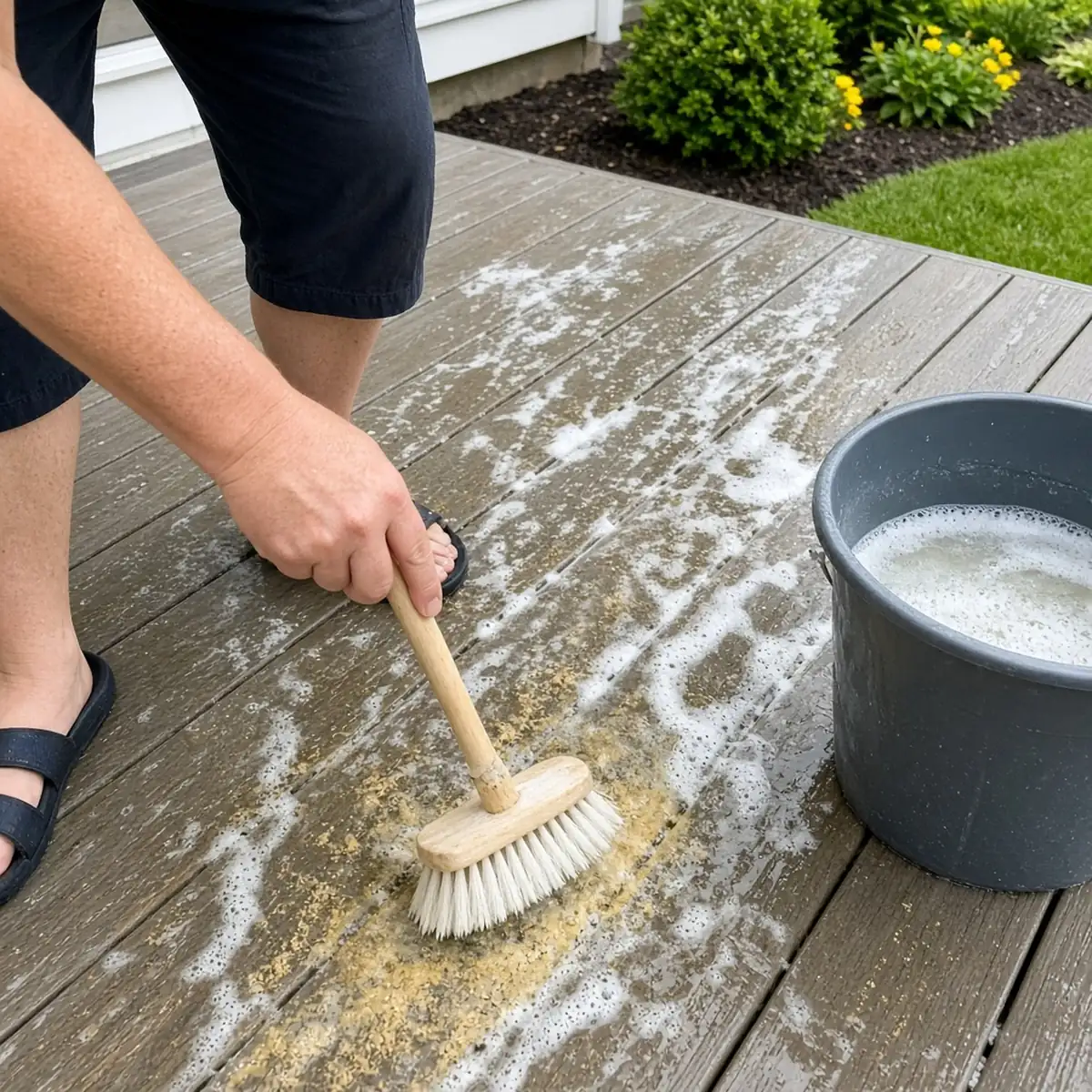
Cleaning pollen and mildew off a composite deck in Woodstock.

The Short Answer

Wash a composite deck about twice a year with warm water, mild soap, and a soft-bristle brush, scrubbing along the grain, then rinse. Do this once after spring pollen season and once in fall. Skip the harsh chemicals and the high-pressure settings that can scar the cap. For a composite deck in Woodstock, that routine handles the pollen and mildew that Georgia humidity brings.

The Routine Step by Step

Cleaning a composite deck works in a simple order. First, clear the deck and sweep off loose debris, leaves, and pollen. Second, rinse the surface with a hose to lift the loose dirt. Third, work a mild soap and warm water across the boards with a soft-bristle brush, scrubbing along the grain, not across it. Finally, rinse the soap off fully before it dries, which prevents a residue film. Spot-clean grease or berry stains as they happen rather than letting them set.

Timing It to Georgia's Seasons

The Georgia calendar sets the cleaning schedule. Spring brings the pine and oak pollen that coats every outdoor surface in Woodstock, so a wash once the pollen drop ends clears the yellow film. Fall brings leaves and the last of the growing-season mildew, so a second wash before winter keeps the surface clean through the cold months. The humidity runs year-round, so spot-cleaning mildew spots between the two main washes keeps them from spreading.

What Not to Do to a Composite Deck

A few common mistakes damage a composite cap:

  • Pressure washing on a high setting, which can scar or pit the surface
  • Using a wire brush or abrasive pad that scratches the cap
  • Applying deck stain or sealer, which composite does not need and does not hold
  • Letting grease, berry, or tannin stains sit instead of cleaning them promptly
  • Using harsh solvents not listed as composite-safe

Following the manufacturer's cleaning guidance keeps the warranty intact.

Why Composite Still Needs Cleaning in Woodstock

Composite still needs cleaning in Woodstock because the cap resists rot and fade, not surface dirt. The humid climate grows a mildew film on any outdoor surface, and the spring pollen settles into the board texture. Neither rots the board, but both dull the look and can get slick when wet. A twice-a-year wash keeps the deck clean and safe underfoot without the sealing a wood deck demands.

Frequently Asked Questions

Can I pressure wash a composite deck?

A composite deck can be pressure washed only on a low setting with a wide fan tip held well back from the surface, since high pressure can scar or pit the cap and void the warranty. Most composite cleans fine with a hose, soap, and a soft brush, so pressure washing is rarely needed. Checking the manufacturer's maximum pressure first protects the boards. Call (770) 691-6781 to reach a composite decking installer in Woodstock.

How do I get mildew off a composite deck in Georgia?

Mildew comes off a composite deck with mild soap, warm water, and a soft-bristle brush, or a composite-safe deck cleaner for stubborn spots, scrubbing along the grain and rinsing fully. Georgia's humidity makes the mildew film routine, so regular washing keeps it from building up. Avoid bleach-heavy mixes unless the manufacturer lists them as safe. Call (770) 691-6781 to reach a composite decking installer in Woodstock.

Does composite decking ever need sealing or staining?

Composite decking never needs sealing or staining, which is one of its main advantages over wood in Georgia's climate. The capped shell is the finish, and adding a sealer or stain can leave a film that peels and voids the warranty. The only upkeep is cleaning. This is why many Woodstock homeowners choose composite over wood. Call (770) 691-6781 to reach a composite decking installer in Woodstock.

How do I remove pollen stains from my deck?

Pollen comes off a composite deck with a rinse and a mild-soap wash once the spring drop ends, since it sits on the surface rather than staining the cap. A soft brush lifts it from the board texture. Washing soon after pollen season keeps it from combining with mildew into a tougher film. Standard cleaning handles it on a composite surface. Call (770) 691-6781 to reach a composite decking installer in Woodstock.

Is composite decking slippery when wet?

Composite decking can get slick when a mildew film or pollen builds up on the surface, which the Georgia humidity encourages, so regular cleaning is also a safety step. A clean capped board has reasonable traction when wet. Textured board profiles grip better than smooth ones in rainy climates. Keeping the surface clean is the main way to keep it from getting slippery. Call (770) 691-6781 to reach a composite decking installer in Woodstock.

Call Now for Composite Decking in Woodstock, GA

For a composite deck or advice on keeping one clean in Woodstock, call (770) 691-6781 to reach a local installer. See composite decking in Woodstock and how long composite decking lasts. Call Now.

Call (770) 691-6781
(770) 691-6781